
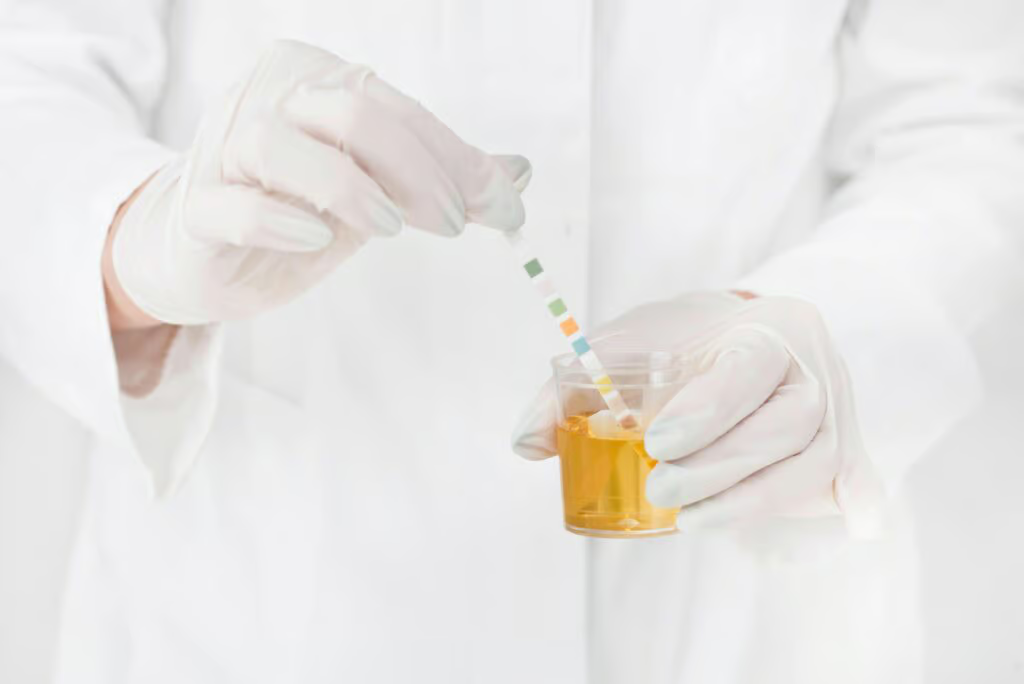
Searching for how to beat a drug test for coke usually starts from a place of real fear, and that fear is understandable when a job, a court date, or custody could hang on the result. The hard truth is that modern testing labs are built to catch the exact shortcuts people reach for, so most last-minute fixes fail, and several carry serious health risks. Knowing how cocaine detection actually works, why evasion tactics rarely hold up, and what a safer path looks like matters far more than any quick trick.
The Reality of Trying to Beat a Cocaine Drug Test
Many people search online for how to pass a drug test for cocaine, hoping a quick fix will do the job. Modern laboratory technology makes that nearly impossible. Labs use highly sensitive equipment built to flag evasion tactics almost instantly, which is why the science matters more than the shortcuts.
Understanding how your body handles the drug explains why cheating fails. When you use cocaine, your body processes it quickly, but your liver breaks it down into lingering byproducts called metabolites. The primary cocaine metabolite is benzoylecgonine, and it stays in your system long after the brief high fades.
Most standard screenings use an immunoassay, a biochemical test that relies on antibodies designed to bind directly to benzoylecgonine. If the metabolite is present, the immunoassay detects it with a high degree of accuracy.
Some people try flushing, drinking large amounts of water to dilute their urine. Testing facilities anticipate this. Technicians measure the specific gravity of your sample and check creatinine levels, a natural waste product in urine. When those levels fall too low, the lab knows the specimen has been watered down.
A flushed sample gets flagged as a dilute specimen, which usually produces an invalid or failed result. Evading detection is stressful and rarely works. A far more reliable path is getting help through a cocaine addiction treatment program in Massachusetts, where clinical support offers a lasting way out of the cycle.
How Long Does Cocaine Stay in Your System?
The detection window for cocaine depends on the testing method used. Your personal biology also plays a significant role. Standard lab screenings rarely look for the parent drug. Instead, they target the longer-lasting metabolite benzoylecgonine.
Because most labs measure these metabolites, not the drug itself, the window reflects how long your body needs to fully process and excrete them. That is also why the amount you used, how often, and how recently all shift the timeline far more than any product or trick you might take beforehand.
| Test Type | Average Detection Window | Primary Target |
|---|---|---|
| Urine | 2 to 4 days (up to 14 days for heavy use) | Benzoylecgonine (Metabolite) |
| Blood | 12 to 48 hours | Cocaine and Metabolites |
| Saliva | 1 to 2 days | Cocaine and Metabolites |
| Hair | Up to 90 days | Cocaine and Metabolites |
Understanding how long cocaine lingers in system helps clarify your situation. Timelines vary, but the science of detection is highly consistent across modern laboratories.
Urine Drug Test
A urine drug test is the most common screening method today. Employers, clinics, and legal entities rely heavily on the urine specimen. If you only use cocaine occasionally, the drug remains detectable for two to four days.
A heavy daily habit changes this timeline entirely. Chronic use causes benzoylecgonine to accumulate in your body tissues, and because of that buildup, a heavy user might test positive for up to two weeks.
Standard federal guidelines govern these urine tests. The Department of Transportation and SAMHSA set strict cut-off levels. The initial immunoassay screen typically uses a 150 ng/mL cut-off, and any presumptive positive triggers a secondary test. That confirmation uses highly accurate GC/MS analysis, usually set at a 100 ng/mL cut-off.
Saliva, Blood, and Hair Testing
Other screening options include saliva, blood, and hair testing. A blood drug panel usually detects very recent substance use, capturing evidence of the drug or your blood alcohol concentration for one to two days.
A saliva test shares a similarly short detection window, generally identifying cocaine for about 24 to 48 hours. Hair drug testing is entirely different and offers a much longer look-back period. A standard 1.5-inch hair sample can reveal drug use for up to 90 days, which makes hair testing nearly impossible to evade with short-term efforts.
Whatever method a lab uses, a presumptive positive is rarely the final word. Confirmatory testing with gas chromatography and mass spectrometry isolates benzoylecgonine and measures it precisely, which is how false positives from poppy seeds or certain medications get ruled out. That same precision makes dilution and tampering easy to spot, because the lab measures an exact molecule rather than guessing.
Factors That May Affect Cocaine Detection Times
Detection timelines are never a perfect, one-size-fits-all rule. Several biological factors influence your unique detection window, so how long you test positive depends on your body and your habits.
- Individual Metabolism: Your metabolic rate dictates the drug’s half-life. Liver function and age affect this process heavily, and a slower metabolism extends the time it takes to clear metabolites.
- Frequency of Use: A person with a severe substance use disorder processes drugs differently. Heavy, frequent use causes metabolites to store in fatty tissues, which significantly prolongs the detection window.
- Hydration Levels: Trying to flush cocaine from the system with water is ineffective. Severe dehydration can concentrate your urine, making detection even more likely.
- Drug Purity: Higher purity cocaine delivers a stronger dose to your body, and a larger dose naturally takes the liver more time to process and eliminate.
- Co-use with Alcohol: Drinking alcohol while using cocaine is highly dangerous. It creates a toxic metabolite called cocaethylene that lingers longer than typical metabolites and increases the risk of severe medical complications.
Your body mass and kidney function also play supporting roles. Healthy kidneys filter waste efficiently, while impaired kidney function slows elimination down. Ultimately, your personal biology determines how long the evidence remains.
This variability is exactly why no online timeline can promise you a safe window. Two people who used the same amount on the same night can clear it days apart, so the only way to be certain a screen comes back clean is to no longer have cocaine in your life at all.
Do DIY Cocaine Detox Kits Work?
Many people panic before a test and ask what cocaine detox kits are. These products are heavily marketed online and in stores, promising to flush cocaine from the system in a matter of hours. In reality, these kits are almost entirely unregulated dietary supplements.
What are the risks of using cocaine detox kits? Ingesting these herbal blends can cause severe clinical issues. Users often experience dangerous electrolyte imbalances and extreme dehydration, and documented medical cases even link some unregulated detox kits to acute psychosis.
Some individuals attempt a dangerous tactic called in vivo adulteration, consuming harsh household chemicals to mask their urine. This practice is incredibly harmful to your internal organs. It causes serious tissue damage and offers no testing benefit.
Clinical laboratories easily defeat these methods. They use rapid spot tests to screen for common adulterants such as nitrites, glutaraldehyde, and bleach. If a technician detects these agents, they flag your sample immediately.
Tampering does not simply cause a false positive. Instead, it triggers an invalid or adulterated result, which almost always requires a mandatory re-test. That re-test is usually conducted under strict, direct observation. Relying on detox kits leaves you facing the same problem with added suspicion.
What a Flagged Result Sets in Motion
A diluted or adulterated result rarely just goes away. In many workplace and legal programs, it is treated the same as refusing to test, which can mean losing a job offer, violating probation, or triggering a mandatory retest under direct observation.
Direct observation means exactly what it sounds like, and it strips any remaining privacy from the process. Once you add the cost of the kit, the wasted effort, and the added suspicion, the attempt to cheat usually leaves you worse off than an honest positive would have.
A Safer, Smarter Way Forward
The pressure of hiding your substance use is exhausting, and relying on evasion tactics only prolongs the anxiety. Your fear about an upcoming drug test is valid, and the stakes are genuinely high. Banking on unregulated shortcuts, though, is not the answer.
Professional substance use treatment is the sustainable path forward because it breaks the cycle of constant evasion at its source. Elevate Recovery provides a compassionate, structured outpatient environment that fits into your real life rather than pulling you out of it.
Why Treatment Works When Cheating Does Not
Every hour spent researching how to outsmart a test changes nothing about the dependence driving the fear. Treatment reverses that. Instead of managing a single screening, you address the compulsion that keeps putting you in front of one, which is the only thing that makes future tests a non-issue. Cocaine use disorder is a recognized medical condition, not a failure of willpower, and it responds to structured clinical care the way other chronic conditions do.
Outpatient Programs That Fit Your Life
Care at Elevate Recovery is organized as a step-down continuum. A partial hospitalization program in Massachusetts offers the most structured level of daytime support, an intensive outpatient program in Massachusetts provides several sessions each week while you keep working, and standard outpatient rehab in Massachusetts keeps you connected as you regain stability.
This structure means you can keep your job and your family commitments while receiving expert care. Treatment relies on evidence-based approaches like Cognitive Behavioral Therapy, and through group sessions you build a genuine support system and learn to manage daily triggers instead of hiding from them.
Care for the Whole Picture
Many people who use cocaine are also managing anxiety, depression, or trauma, and treating only one side rarely holds. Dual diagnosis treatment in Massachusetts addresses substance use and mental health together, which lowers the risk of relapse once formal treatment ends.
Recovery also continues after the structured phase, with aftercare and relapse prevention planning that keep you supported so you no longer live in fear of the next drug screen. You do not need residential care or detox to begin, and you do not have to face this alone. Reclaiming your life starts with proper, professional support.
What Recovery From Cocaine Actually Looks Like
Recovery is not a single event or a clean test result. It is a gradual process of learning why you reach for cocaine, building routines that do not depend on it, and repairing the parts of life that use has strained. Early on, that can mean simply getting through cravings with support in the room, and over time it becomes steadier confidence that you can handle stress without a substance.
Most people are surprised by how much lighter life feels once the constant management of use and detection falls away. There are no more test-day panics, no hidden supplies, and no calculating how long something will stay in your system. The team at Elevate Recovery walks that path with you, adjusting the level of care as your needs change.
Family and relationships often recover alongside you. As trust rebuilds and the secrecy fades, the people who care about you can become part of your support system rather than something to hide from, which makes staying in recovery far more durable.
Reaching out does not commit you to anything beyond a conversation. An assessment simply clarifies where you are and which level of outpatient care fits, and verifying your insurance often shows that treatment is more affordable than people expect.
Finding Help for Cocaine Addiction
Living with the constant fear of a drug screen is a heavy burden to carry. Trying to outsmart laboratory testing often leads to frustration, invalid results, and potential health risks. You deserve a life free from this endless cycle of anxiety and evasion. Meaningful change happens when you address the root of the issue with compassionate, clinical support. Elevate Recovery provides the daily structure you need to heal while staying connected to your work and family. Reach out to our team at (877) 592-2102 to verify your insurance and explore how our outpatient programs offer a secure, lasting way forward. Contact us now.
Sources
- National Institute on Drug Abuse. (March 3, 2017). A sensitive assay for urinary cocaine metabolite benzoylecgonine shows more positive results and longer half-lives than those using traditional cut-offs. National Institute on Drug Abuse.
- National Institutes of Health. (May 24, 2012). Evaluation of Two Enzyme Immunoassays for the Detection of Benzoylecgonine in Urine. National Institutes of Health.
- U.S. Food and Drug Administration. REVIEW MEMORANDUM. U.S. Food and Drug Administration.
- U.S. Department of Transportation. (June 6, 2023). DOT Rule 49 CFR Part 40 Section 40.85. U.S. Department of Transportation.
- National Center for Biotechnology Information. Chapter 3. Intensive Outpatient Treatment and the Continuum of Care. National Center for Biotechnology Information.
- Substance Abuse and Mental Health Services Administration. (June 9, 2023). National Helpline for Mental Health, Drug, Alcohol Issues. Substance Abuse and Mental Health Services Administration.
- University of Washington. (January 5, 2026). Comprehensive Drug Screen Limits of Detection. University of Washington.